How to Nail the Perfect Cheese Pull on Pizza
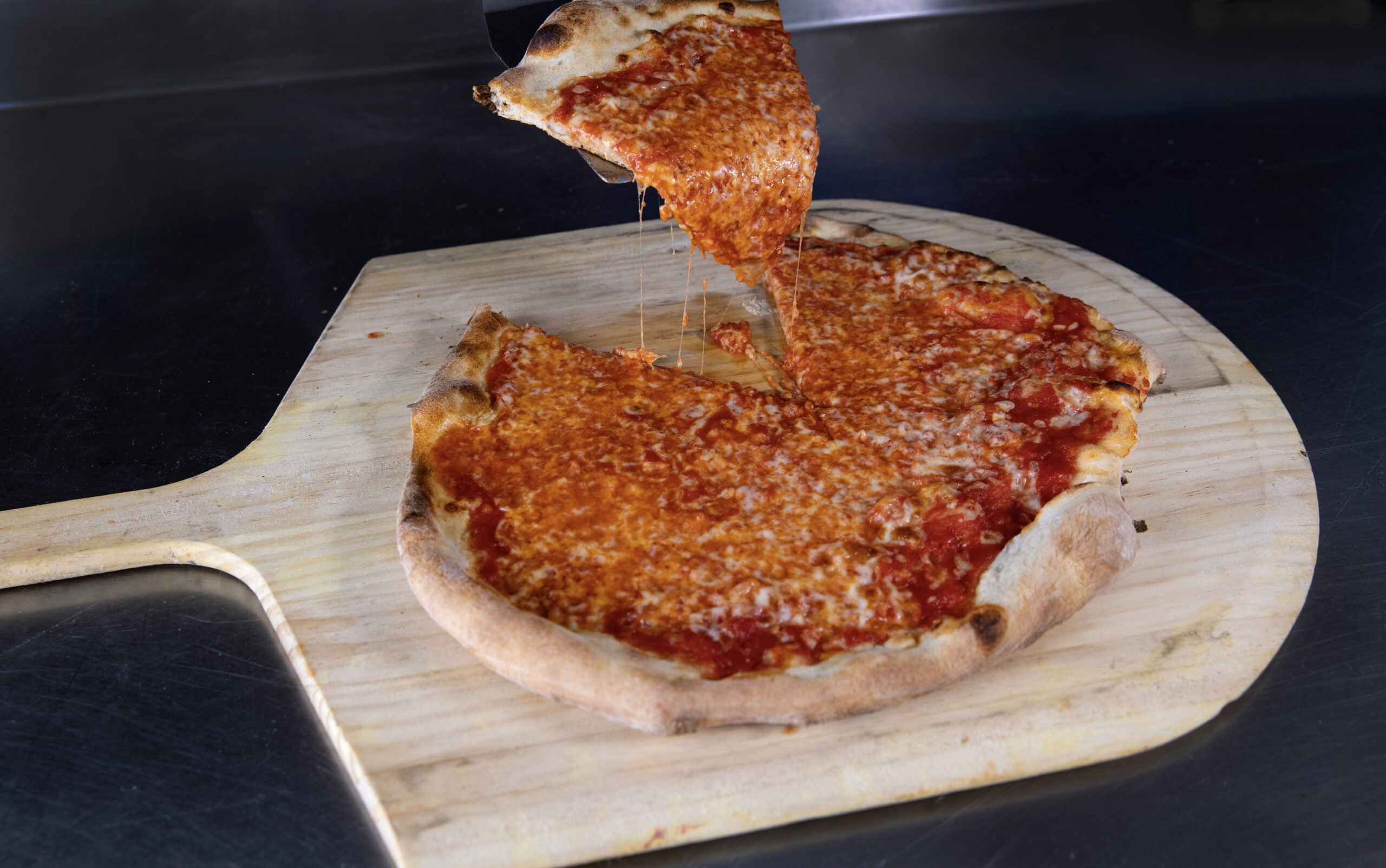
The perfect cheese pull is one of those small kitchen victories that looks effortless when it goes right and stubbornly refuses to happen when something is even slightly off. Anyone who has ever lifted a hot slice of pizza and watched the cheese stretch into long, glossy strands knows the appeal. It is visual, tactile, and tied to texture in a way that goes beyond presentation. A good pull signals melt, moisture, balance, and timing. A bad one usually points to a problem somewhere in the chain, from the cheese itself to the oven temperature to the way the pizza rested after baking.
For a classic Cheese Pizza, the pull matters because the whole pie depends on a few basic elements doing their jobs exceptionally well. There is no pepperoni, sausage, or pile of vegetables to distract from weak melt or greasy cheese. Every bite reveals whether the mozzarella fused properly, whether the sauce protected the crust without watering down the top, and whether the bake was hot enough to melt the cheese deeply without breaking it.
Getting there is less about tricks than it is about understanding the behavior of cheese under heat. Once you know what makes cheese stretch, you can control it with surprising consistency.
What a great cheese pull actually means
A dramatic cheese pull is not just about length. Plenty of pizzas produce a long strand or two, but the best pulls have a particular look and feel. The cheese should stretch in cohesive ribbons rather than snapping instantly or sliding off in one molten sheet. It should cling to the slice and the remaining pie at the same time. It should feel elastic, not rubbery. Just as important, it should still taste clean and milky rather than oily or overcooked.
That balance comes from structure. Mozzarella is prized for pizza because its proteins align in a way that can soften and stretch when heated. Moisture inside the cheese helps it loosen. Fat adds richness and melt. Heat changes all of it. If you push the cheese too far, the protein network tightens, squeezes out fat, and turns greasy. If you do not push it far enough, the center stays dense and the pull is short or uneven.
This is why the same pizza can look beautiful in the oven and disappoint on the plate. Surface melt is not enough. You need internal melt, proper moisture retention, and timing that catches the pie at its peak.
Start with the right mozzarella
If you want reliable cheese pull, mozzarella is still the foundation. There are variations within that category, and they matter more than many home cooks realize.
Low-moisture mozzarella is the standard for most American-style pizza because it melts evenly, browns well, and holds a stretch without flooding the pie. It is usually sold in blocks or pre-shredded bags, though block cheese is the better choice if pull is the goal. Pre-shredded cheese often contains anti-caking agents that interfere with smooth melting. The difference is subtle in some dishes, but obvious on pizza. Freshly shredded low-moisture mozzarella tends to fuse more cleanly.
Fresh mozzarella can produce lovely pools and soft stretches, especially on Neapolitan-style pies, but it is trickier. It contains much more water. If you slice it and scatter it carelessly over the pizza, that extra moisture can dilute the surface, slow browning, and create wet spots that compromise both texture and pull. Fresh mozzarella needs draining, blotting, and a bake style hot enough to handle its moisture load.
Whole-milk mozzarella usually outperforms part-skim for dramatic pull. The added fat gives a more supple melt and a richer mouthfeel. Part-skim can still work well, especially in a high-heat home oven where excess grease is a risk, but it tends to be slightly firmer and less luxurious when stretched.
Blends can help, but they should be deliberate. A small amount of provolone can deepen flavor and improve browning. A touch of fontina can add fluidity. Too much of either can make the top greasy or heavy. If your sole mission is a textbook pull on Cheese Pizza, a high-quality whole-milk low-moisture mozzarella remains the most dependable choice.
Shred size is not a minor detail
Shred your own cheese, and pay attention to the size. This sounds fussy until you see what it does in the oven.
Very fine shreds melt quickly, sometimes too quickly. They can overcook on the surface before the underlying layer fully loosens. Thick chunks take longer to melt and may leave you with isolated patches rather than an even blanket. Medium shreds or short thin strips tend to work best because they settle into a continuous layer with enough air between them to melt uniformly.
In pizzerias, cheese application is often more controlled than people expect. Experienced pizza makers are not just throwing handfuls around. They are watching coverage, thickness, and the distance from the rim. A mound in the center will melt into a heavy cap and can pull the toppings toward the middle. Sparse edges create dry bites and broken strands. Even distribution leads to even pull.
There is also such a thing as too much cheese. Counterintuitively, overloading a pizza often makes the pull worse. A thick blanket may separate from the slice as one hot slab rather than stretch into delicate strands. It can also trap steam, soften the crust, and insulate itself from the heat needed for balanced browning. On a typical 12-inch pizza, many home cooks do better with roughly 6 to 8 ounces of mozzarella than with the pound they are tempted to use. A 14-inch pie may want 8 to 10 ounces, depending on style and sauce load.
Moisture management decides more than most people think
Cheese pull is often lost to excess water. The culprit is not always the cheese. Sauce, fresh mozzarella, vegetables, even dough fermentation can all contribute.
Sauce should be thick enough to spread without running. If it looks loose in the bowl, it will likely steam under the cheese and weaken the bond between layers. A good pizza sauce is usually less watery than pasta sauce, with enough body to stay put under heat. You want moisture, but controlled moisture.
If you are using fresh mozzarella, drain it well. Slice it, lay the slices on paper towels or a clean kitchen towel, and let them sit. Some cooks do this for 15 to 30 minutes. Others refrigerate the slices uncovered for a little longer to dry the surface. The exact time depends on the brand and how wet it is. The point is simple: do not ask your oven to evaporate all that water during the bake.
Wet toppings create similar problems. Mushrooms, fresh tomatoes, and spinach all release moisture that can break up the cheese layer and shorten the stretch. For a serious cheese pull, especially on Cheese Pizza, restraint helps. Fewer variables make it easier to get the melt exactly right.
Heat is the engine behind the stretch
A perfect cheese pull depends on enough heat to fully melt the cheese before it has time to dry out or separate. This is one reason restaurant pizza often outperforms homemade. Commercial deck ovens, gas ovens, and wood-fired ovens reach temperatures that most kitchens cannot match. They bake fast, which melts the interior while preserving moisture.
That does not mean a home oven cannot produce excellent results. It just needs help. A preheated pizza stone or baking steel makes a big difference because it drives heat into the dough quickly, preventing a long sluggish bake that dries the cheese. A steel is especially effective in home setups because it transfers heat aggressively. If you have ever felt that your cheese browned before the crust finished, you were probably fighting a weak floor temperature.
For many home ovens, 500 to 550 degrees Fahrenheit works best if your equipment allows it. Give the stone or steel at least 45 minutes, and preferably an hour, to preheat thoroughly. A half-heated baking surface is one of the most common reasons pizza underperforms at home.
Broilers can help at the end, but use them carefully. A brief finish under the broiler can add attractive blistering and complete the surface melt. Leave it too long and the cheese tips into grease and toughness. The line between glossy and broken is not wide.
The bake window is shorter than you think
Timing matters as much as temperature. Cheese pull peaks in a narrow window after the pizza comes out of the oven. Pull the pie too soon, and the cheese may still be unstable, flowing rather than stretching. Wait too long, and the cheese sets, firms, and loses elasticity.
Most pizzas benefit from a short rest, often 60 to 120 seconds. That brief pause lets molten cheese settle and attach itself more cohesively to the slice. It also prevents the top from sliding. This is especially important if your sauce runs close to the edge or your pizza carries a generous layer of cheese.
I learned this the irritating way years ago, testing pies one after another for a catering menu. Fresh from the oven, the cheese looked magnificent, but the first slice often left half the topping behind. When I forced myself to wait just a minute before cutting, the pull improved immediately. Not because the cheese got hotter, but because it stabilized.
There is another side to the timing issue. Once the pizza sits for several minutes, the pull starts to decline. The proteins firm up, the surface cools, and the strands shorten. If you are serving for maximum visual effect, cut and lift in that sweet spot after the brief rest but before real cooling begins.
Cutting changes the result
The knife or wheel matters. A dull cutter drags through the cheese and can break the structure that would otherwise stretch between slices. A sharp pizza wheel, used in a firm single pass, preserves the surface better. Scissors can work surprisingly well on some thin pies, but for most people a good wheel is the practical choice.
Angle matters too. If you press down and saw at the pizza, you shear the cheese into short sections. If you roll decisively from crust to center and rotate as needed, the cut is cleaner. Then, when lifting the slice, support it from below. A drooping tip can yank the cheese free instead of allowing a smooth pull.
This is one of those details that looks almost absurdly small until you compare outcomes side by side. The pizza is the same. The cheese is the same. The cutter and the lift produce completely different results.
The dough and sauce still influence the pull
People often isolate the cheese as if it acts independently, but the dough beneath it and the sauce between them both affect the final stretch.
A crust that bakes crisp enough to support the slice gives the cheese a stable base. If the center is underbaked and floppy, the cheese layer shifts when you lift it. That movement tears strands before they can form. A pizza with a little structure under the tip usually produces a more graceful pull than one that folds under its own weight.
Sauce quantity also matters. Too little sauce can cause the cheese to bond tightly to the crust and lose some fluidity. Too much can create a wet barrier that lets the cheese skate off. There is a middle ground where the sauce contributes moisture without destabilizing the top. On a 12-inch pie, that might be around a quarter to a third of a cup, depending on thickness and style. The goal is coverage, not a stew.
Common reasons the cheese pull fails
When a cheese pull falls flat, the cause is usually one of a handful of repeat offenders.
- The cheese was pre-shredded and did not melt smoothly.
- The oven or baking surface was not fully preheated.
- The pizza carried too much moisture from sauce, fresh mozzarella, or toppings.
- The cheese was overbaked and had already started to separate.
- The slice was cut or lifted before the pie had a brief settling period.
These are the issues I would troubleshoot first because they account for most disappointing home results. Fancy techniques are rarely needed until the basics are under control.
Browning versus stretch, the trade-off nobody mentions enough
Many people want two things at once: deep golden spotting on top and a long, creamy stretch. Those goals can compete with each other.
As mozzarella browns more deeply, it also loses moisture. That can intensify flavor, but it can shorten the pull. If you push the top hard for color, especially in a home oven where the bake already runs longer than in a commercial one, you may sacrifice some elasticity. The best compromise is often light to moderate browning with full internal melt.
This is why some of the most impressive cheese pulls come from pies that are not aggressively browned. The cheese still looks glossy and alive. Once the surface turns patchy with oil and dark freckles everywhere, the stretch tends to become less elegant.
That does not mean you should avoid color. A little browning adds complexity and visual appeal. It just means you should decide what matters more for that particular pie. If the goal is a social-media-worthy lift, err slightly on the side of a softer finish. If the goal is a more caramelized flavor profile, accept that the pull may be shorter.
A practical setup for home cooks
For most home kitchens, I recommend a straightforward approach rather than chasing restaurant equipment. A baking steel or stone, an oven set as high as it safely goes, whole-milk low-moisture mozzarella shredded from the block, a restrained amount of sauce, and a short post-bake rest will solve most problems.
Here is the workflow I return to when I want consistency:
- Preheat the oven with a steel or stone for at least 45 minutes at 500 to 550 degrees Fahrenheit.
- Use moderately thick pizza sauce, spread thinly and evenly.
- Top with freshly shredded whole-milk low-moisture mozzarella, enough to cover without piling.
- Bake until the crust is done and the cheese is fully melted with light browning.
- Rest the pizza for about 1 to 2 minutes, then cut cleanly and lift immediately.
That sequence is simple, but it reflects a lot of trial and error. Every step protects either heat, moisture, or structure, which are the three things behind a strong cheese pull.
Style matters, and so do expectations
Not every pizza style is supposed to produce the same kind of pull. A New York slice, a pan pizza, a Neapolitan pie, and a tavern-style pizza behave differently. A New York slice often gives long, elegant strands because the cheese layer is cohesive and the slice has enough body to support it. Pan pizza can create dramatic molten pulls because the cheese is abundant and deeply melted, though sometimes heavier. Neapolitan pizza may give softer, shorter stretches, especially if topped with fresh mozzarella in separated pieces rather than a uniform blanket. Tavern-style pizza, cut into squares, often emphasizes crispness over theatrical pull.
So if your benchmark is a giant ribbon of cheese from a foldable slice-shop pie, it helps to build and bake in that direction. The cheese pull is not just about technique. It is also about matching your ingredients and method to the outcome you want.
Fine-tuning when you are close but not quite there
Once the basics are right, the final improvements come from small adjustments. If your cheese stretches but turns greasy, reduce the bake time slightly or lower the cheese quantity. If it melts beautifully but lacks length, try whole-milk mozzarella instead of part-skim, or switch from bagged shreds Cheese Pizza to a block. If the top looks great but the center slides, reduce sauce or let the pie rest a little longer before cutting.
These are not dramatic changes, but pizza rewards precision. A one-minute difference in preheat, an ounce less cheese, or a drier mozzarella can shift the result from decent to memorable.
There is also a habit worth developing: taste and observe one variable at a time. Change the cheese brand this week. Change shred size next week. Adjust bake position after that. When people change everything at once, they rarely learn what helped. Good pizza making is practical, and the best cooks I know treat it that way. They notice patterns, repeat what works, and stop chasing novelty when consistency is the real goal.
When the perfect pull finally happens
When everything lines up, the result is unmistakable. The slice lifts with just enough resistance. The cheese stretches in long pale ribbons, glossy rather than oily, anchored at both ends. The crust stays crisp enough to hold, the sauce stays where it should, and the cheese tastes as good as it looks.
That moment is not luck. It comes from ingredient choice, moisture control, strong heat, careful timing, and a little restraint. A great cheese pull on pizza is less about excess and more about balance. On a well-made Cheese Pizza, that balance is visible in the very first slice.
Brooklyn Pizza
1647 Arapahoe Ave
Boulder, CO 80302
+1 720-328-2324
FAQ About Cheese Pizza
What type of cheese is used on a cheese pizza in Boulder, CO?
The cheese varies by pizzeria. Brooklyn Pizza uses whole-milk mozzarella made in-house on its standard pies and offers a plant-based cheese option for vegan pizza. Ask the shop directly about ingredients if you have a dietary restriction.
How many slices are in a large pizza in Boulder, CO?
Slice count depends on how the shop cuts the pie. Brooklyn Pizza lists a 16-inch large pizza. If you are ordering for a group, call to confirm the number of slices or ask whether a smaller cut is available.
What is New York style pizza in Boulder, CO?
New York-style pizza usually has a thin crust and wide slices that can be folded. A classic cheese slice pairs tomato sauce with mozzarella. Brooklyn Pizza serves New York-style pizza by the slice and as whole pies.